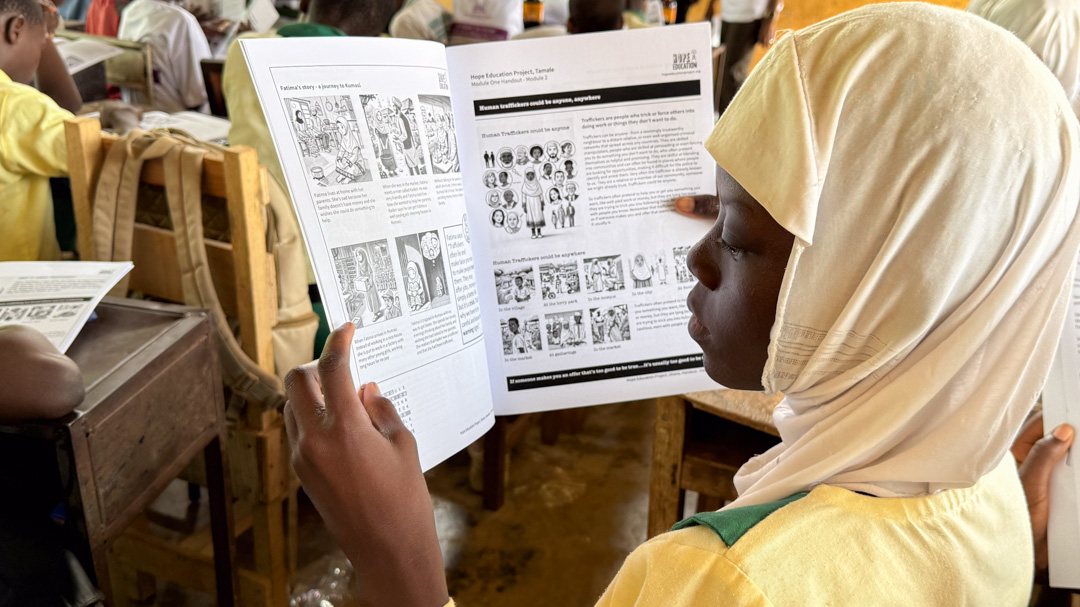
 The Hope Education Project is a survivor-led anti-trafficking organisation working with schools and communities across Northern Ghana. Our mission is to disrupt trafficking and exploitation by equipping children, young people, and community leaders with practical education on trafficking risks, safe migration, digital safety, and safeguarding practices that protect families and reduce vulnerability.
HEP delivers structured, age-appropriate education in junior high schools and community settings, using stories, role play, discussion, and illustrated learning materials designed for low-literacy environments. The programme focuses on real-world risk, helping young people recognise grooming, false job offers, unsafe migration pathways, and online exploitation. A core element of the work is strengthening trusted-adult networks so children know who to turn to early, before harm occurs.